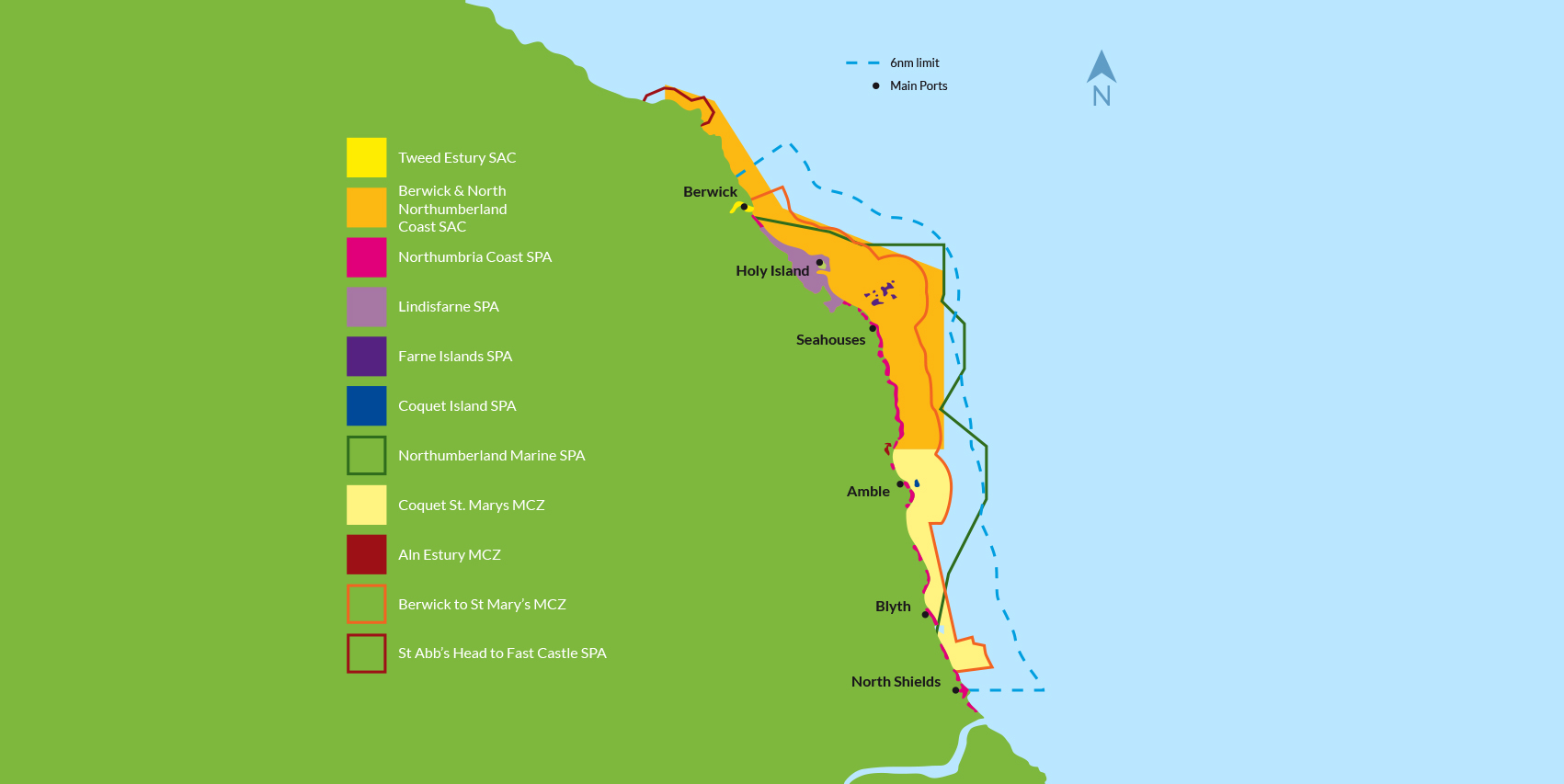
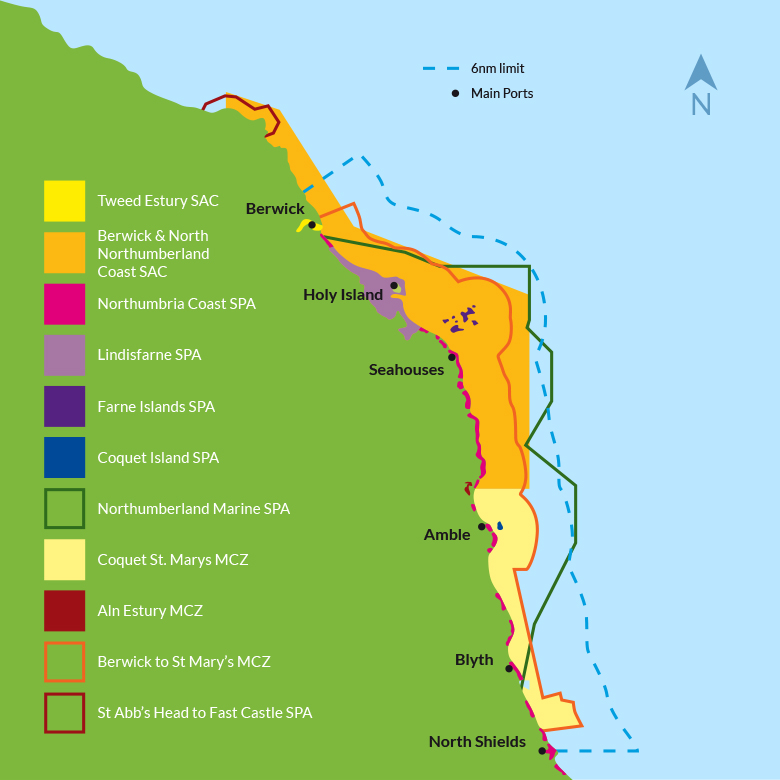
MPAs in our Area
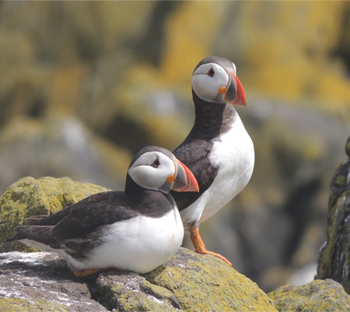
At this time of year large numbers waders, wildfowl, ducks and geese are returning from their breeding grounds so that they can spend the winter resting and feeding on our coast. Some of these bird species, such as greylag goose, sanderling, purple sandpiper, redshank and dunlin, are here in internationally significant numbers. It is important to remember that coastal birds use up a lot of energy during these cold, short, winter days and so are particularly sensitive to disturbance. Having to move or fly off to avoid people or dogs can use up valuable energy reserves and reduce the short time available for them to feed. It may take them many hours to make up the energy lost, which ultimately lowers their chances of surviving through to their summer migration.
If you are out on the coast over the winter months then these simple guidelines will help you protect any birds that you see:
● Look out for any feeding or resting birds and take care not to disturb them
● If birds appear become alert and stop feeding then move further away
● Keep dogs away from coastal birds, putting your dog on a lead if necessary
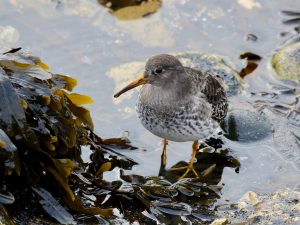
Purple Sandpiper Photo Credit: Tom Cadwallender
The Capturing Our Coast project have launched their new CoastXplore app. The app can be installed on mobile phones and other Android or iOS devices. It collects information on how we use our coastlines. We know types of activities that occur on our coast, such as sea angling and surfing, but we don’t have much information on the number of people doing each activity. The information submitted via the app will be added to a national database which will be used by organisations who look after our coast to inform decisions they make about our coastline’s management.
The app can be downloaded at https://www.capturingourcoast.co.uk/content/coastxplore
Welcome to our new online toolkit and website. We hope this will provide a handy one-stop-shop for all of your information needs about the marine environment along the Berwickshire and Northumberland coast. The site is intended as a working tool to help those organisations undertaking management of our inshore waters and we welcome feedback on its content and ease of use. Please contact us if you have any queries about the content or suggestions about how it can be improved. The creation of the toolkit has been made possible by a Resilient Heritage grant from the Heritage Lottery Fund, whose support we gratefully acknowledge. Thank you also to Northumberland IFCA for administrating the HLF, to Natural England for the additional funds towards costs of the site, and to the many people who made their photographs available for use: Paula Lightfoot, Iain Robson, Tom Cadwallender, The National Trust for Scotland, Stuart Pudney, Natural England, The National Trust, The Environment Agency, James Kitson, Max Kelly, Visit Berwickshire Coast, NIFCA, Kelsey Potlock, and Rory Lane.
Conservation Advice packages for the Farne Islands Special Protection Area (SPA), the Aln Estuary Marine Conservation Zone (MCZ), and the Coquet to St Mary’s MCZ have recently been published by Natural England.
Theses draft Advice Packages can be used to assess the impacts of ongoing or proposed management activities and include information about:
All of the published Advice Packages for the Northumberland coast can be viewed at https://www.gov.uk/government/publications/northern-north-sea-marine-area-index-map-and-site-packages
We work regularly with our partners to develop individual projects to address specific issues or management needs on marine protected areas.
Take a look at our most recent project or view all of our projects.