
As part of Eider Duck Day on 20th March 2021 Sally Dunbar, Assistant Ranger National Trust Northumberland Coast, has provided us with a short article about the successful nesting attempt of a female eider near Lindisfarne Castle in 2020
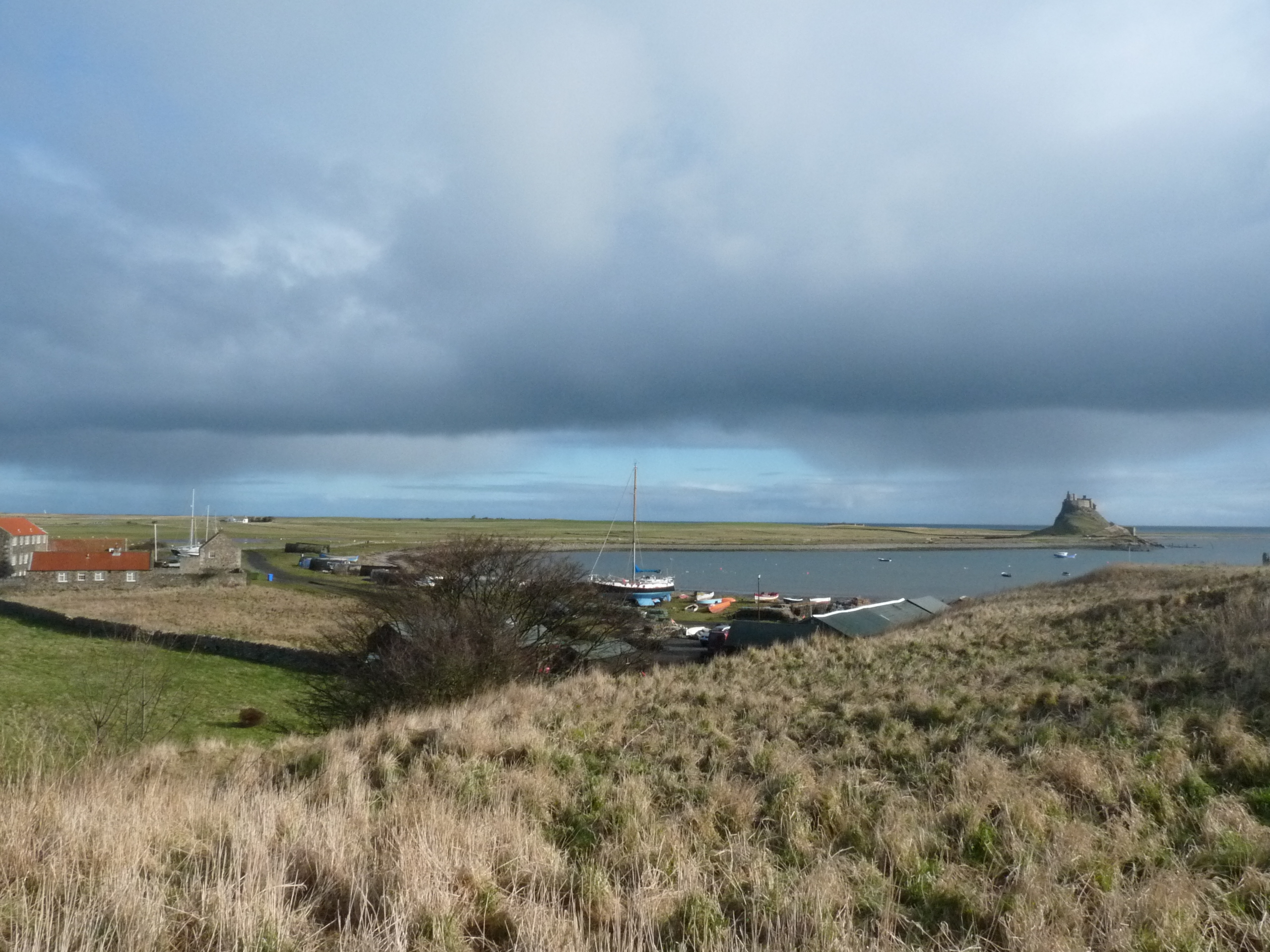
It was blowing an absolute hoolie that day in May when myself and a colleague made the trip over the causeway to carry out some essential maintenance to our nesting shorebird site at Lindisfarne. We were putting up signs along the fence line to remind people to keep their dogs on leads, fighting a losing battle against the wind, when I saw her. Hunkered down by a fencepost, flat as a pancake, seeking what little shelter she could against the full force of the North Sea: a lone female eider.
Eiders are coastal breeders, often referred to as sea ducks, building nests out of their fluffy down feathers. This super insulator provides the precious clutch of eggs protection from the gale force winds and salt spray, affording the mothers the luxury of those sea views.
So, there she was, buried amongst the shingle. She had pulled in bits of seaweed to create her nest, carefully lining it with her softest feathers. And she looked thoroughly fed up. On top of the hammering the wind was giving her, she now had two rangers to deal with. We apologised and gave her a wide birth so as not to disturb her and finished up our work.
I reported back to the team and was greeted with whoops and hollers of celebration. Little had I realised that I had just encountered the first eider to breed on the shore site in recent memory.
Upon our next visit to the site, she was gone. Lockdown restrictions and a skeleton staff meant it had been more than a month since our last visit, so I wasn’t hopeful of even finding the nest, especially as we had experienced some exceptionally high tides in the weeks that had passed. But lo and behold, there it was, dangerously close to the strand line, tucked in close to the fencepost.
I carefully sifted through the nest, lifting out bits of seaweed and down until I found what I was looking for: in amongst fragments of shell, I pulled out the leathery membranes or “egg sacks” indicative of a successful hatching. Three of them. After a prolonged absence from the site, she had successfully brooded her eggs and walked, or perhaps more accurately waddled, away with three ducklings.
And you never know, eiders show a high degree of nest site loyalty, often returning to their own birthplace to breed. Perhaps, in a few years’ time, these three will once again return to our shore site to raise the next generation.

Female Eider on nest (Photo: The National Trust)